













Similar Animation Does Not Mean the Same Rules
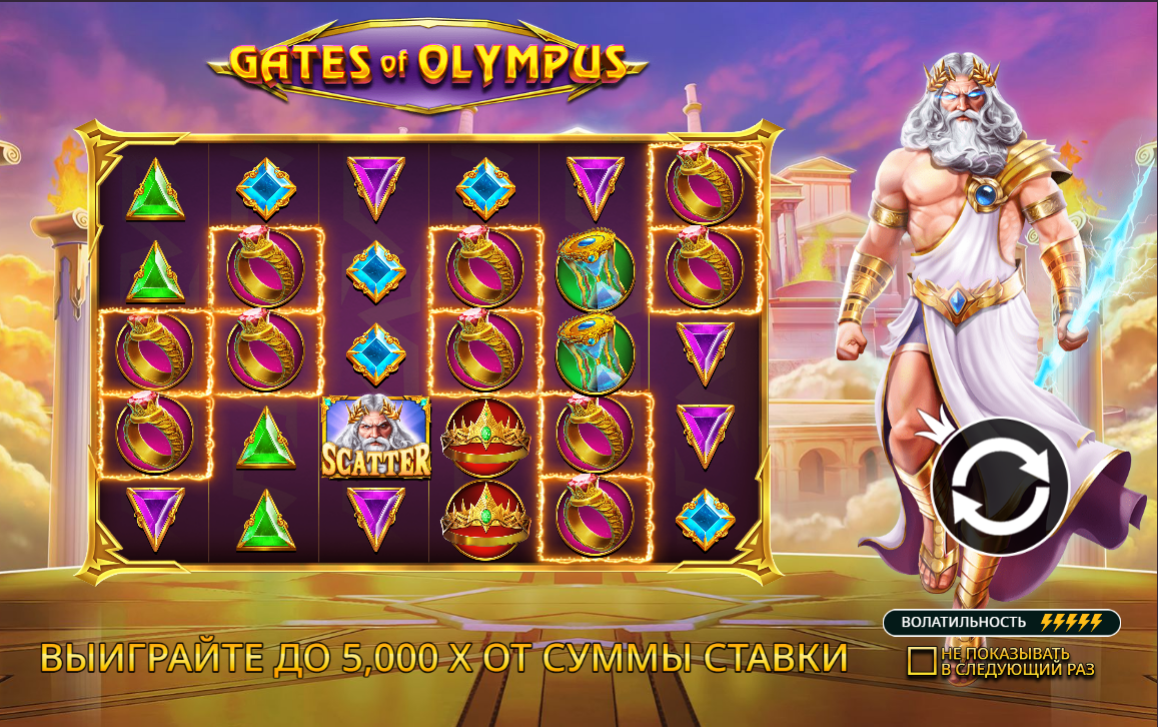
In Gates of Olympus and Fortune of Olympus, symbols disappear after a win and new ones fall from above. Visually, both slots are built around cascades, but the winning group is determined differently. The original series uses Pay Anywhere, while Fortune of Olympus uses Cluster Pays.
The difference is fundamental: in the first system, what matters is the total count of matching symbols, while in the second, it is their adjacency. Because of this, the same pattern on the grid can be a win in one game and nothing in the other.
How Pay Anywhere Works on a 6×5 Grid
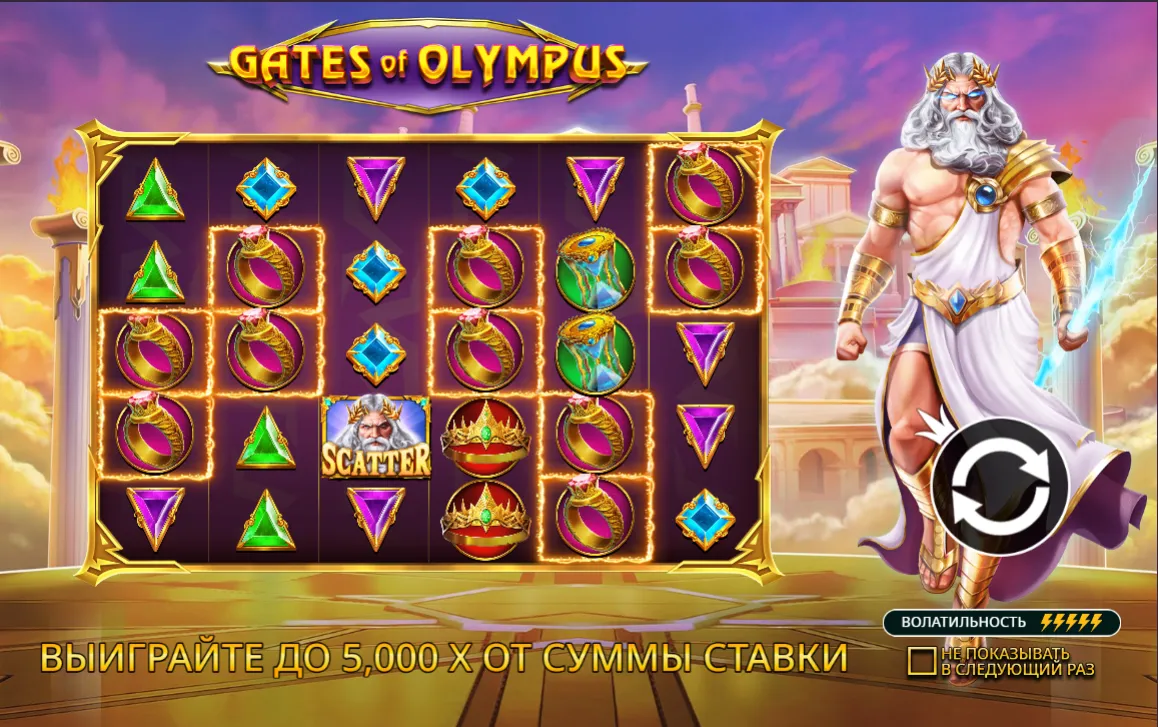
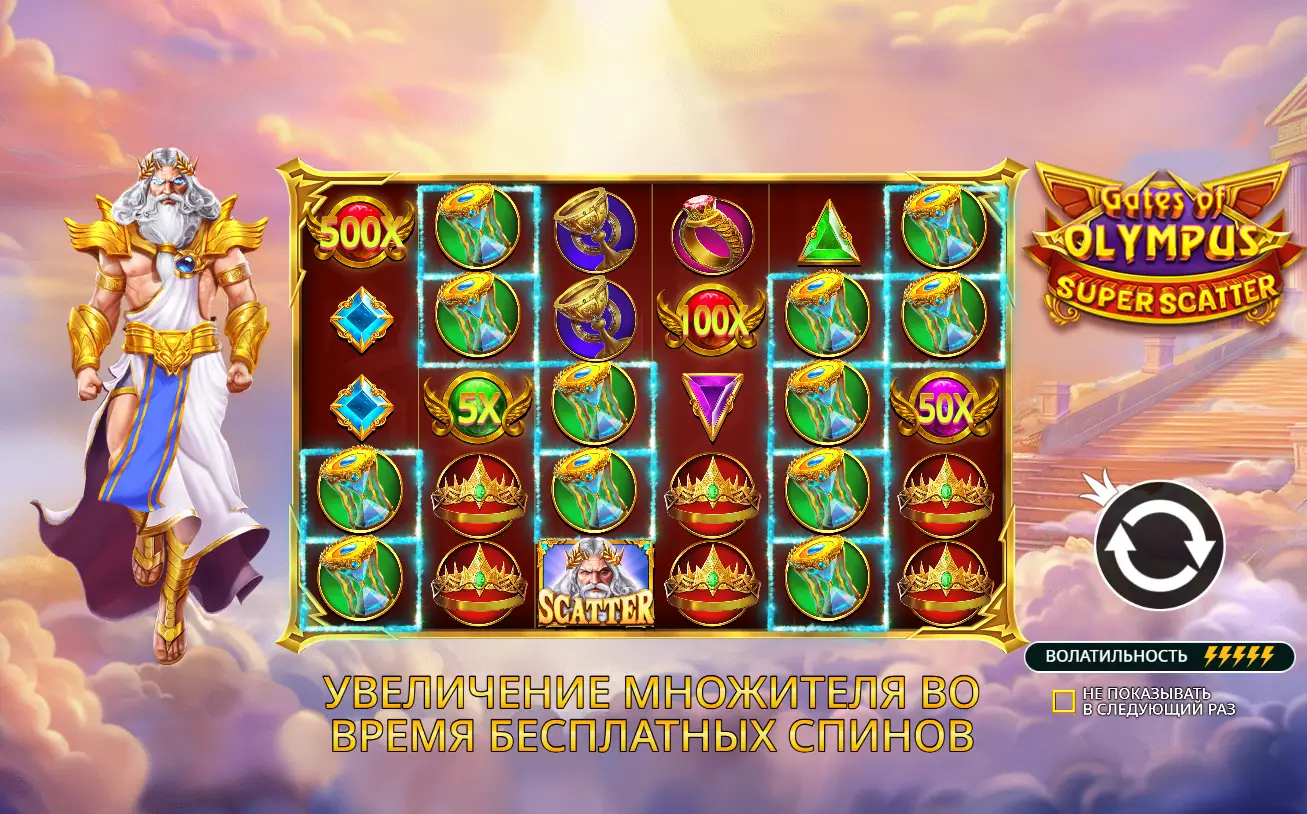
In Gates of Olympus, the 1000 version, Xmas 1000, and Super Scatter, a payout starts with eight matching symbols. They can be in different corners and do not need to touch. The system simply counts how many of them are on the 6×5 grid.
For example, four green stones on the left and four on the right form a win, even if other symbols lie between them. After the payout is calculated, all eight disappear at once. New symbols fall from above, and the system evaluates the grid again.
In Pay Anywhere, it helps to look at the total number of repeats. Position matters for the next drop, but not for the initial recognition of the group as a win.
How Cluster Pays Works on a 7×7 Grid
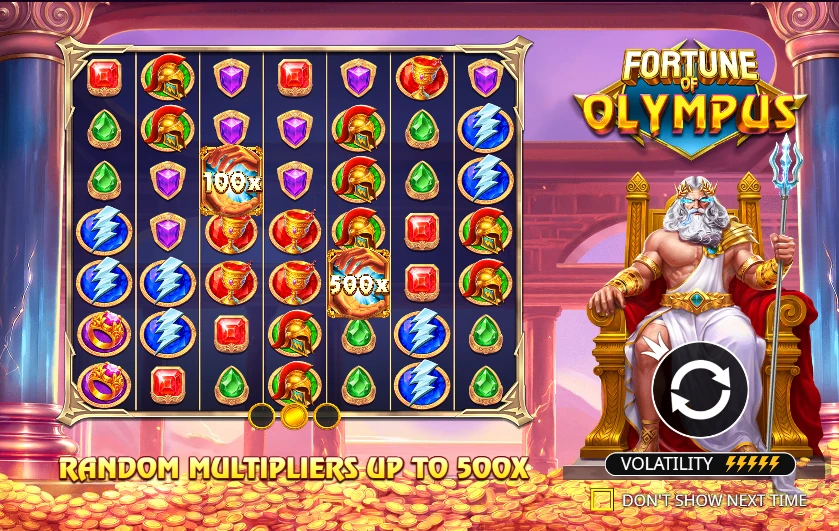
In Fortune of Olympus, you need at least five adjacent matching symbols. They must touch by sides and form a single cluster. Scattered copies in opposite parts of the grid do not combine into one payout.
If there are seven matching symbols on the board but they are split into groups of three and four, there is no winning cluster. At the same time, a compact group of five already pays. The larger 7×7 grid gives more room, but it requires you to read the shape, not just the count.
What Cascades Change
In both systems, winning symbols are removed. But the consequences differ. In Pay Anywhere, the disappearances can be spread across the whole grid, so new symbols fall into several columns. In Cluster Pays, a more connected area opens up, and the next cascade can complete a neighboring mass.
You cannot assume in advance that one format is more generous: payout rules and tables are tuned together with the grid size. A 7×7 grid does not automatically mean more wins, and the lower threshold of five symbols is balanced by the adjacency requirement.
The Role of Multipliers
Gates of Olympus adds multipliers to a winning cascade only when there is a paid group. Fortune of Olympus follows the same general logic: several multipliers in a sequence are added together and then boost the win.
But the base payout is created differently. In the original, it comes from a sufficient number of matching symbols across the grid. In Fortune, it comes from a specific adjacent cluster. So before assessing a multiplier, you first need to understand which rule made the combination a win.
A Practical Way to Learn the Difference
- In Gates of Olympus, count one symbol type across the whole grid without paying attention to distance.
- In Fortune of Olympus, find one compact group and check whether the symbols are connected by sides.
- After a win, track which cells were cleared and where the new symbols came from.
- Only then look to see whether a multiplier appeared on the paid cascade.
This order helps avoid the feeling that the game “missed” an obvious combination. Most often, the reason is not the cascade or the multiplier, but a mix-up between Pay Anywhere and Cluster Pays.
Conclusion
Pay Anywhere is the arithmetic of total count: 8-30 matching symbols on a 6×5 grid can be anywhere. Cluster Pays is the geometry of adjacency: Fortune of Olympus requires groups of 5-15+ connected symbols on a 7×7 grid. Cascades and multipliers make the games look similar, but it is the way the first payout is formed that makes them mechanically different.