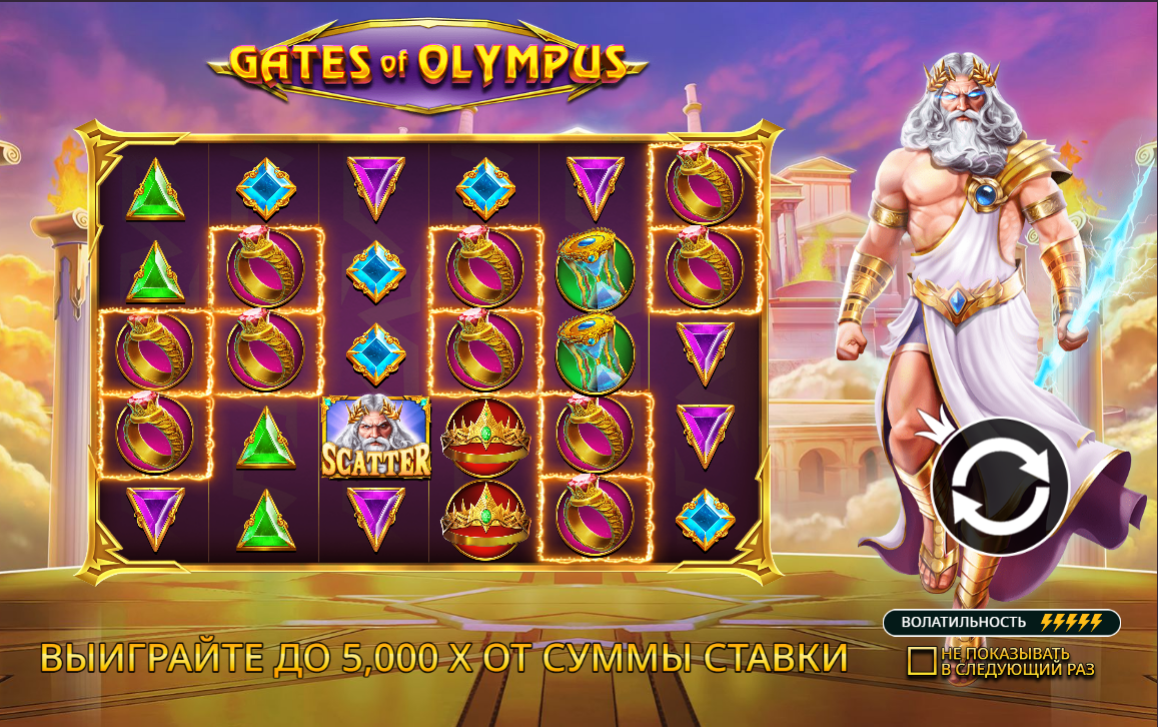





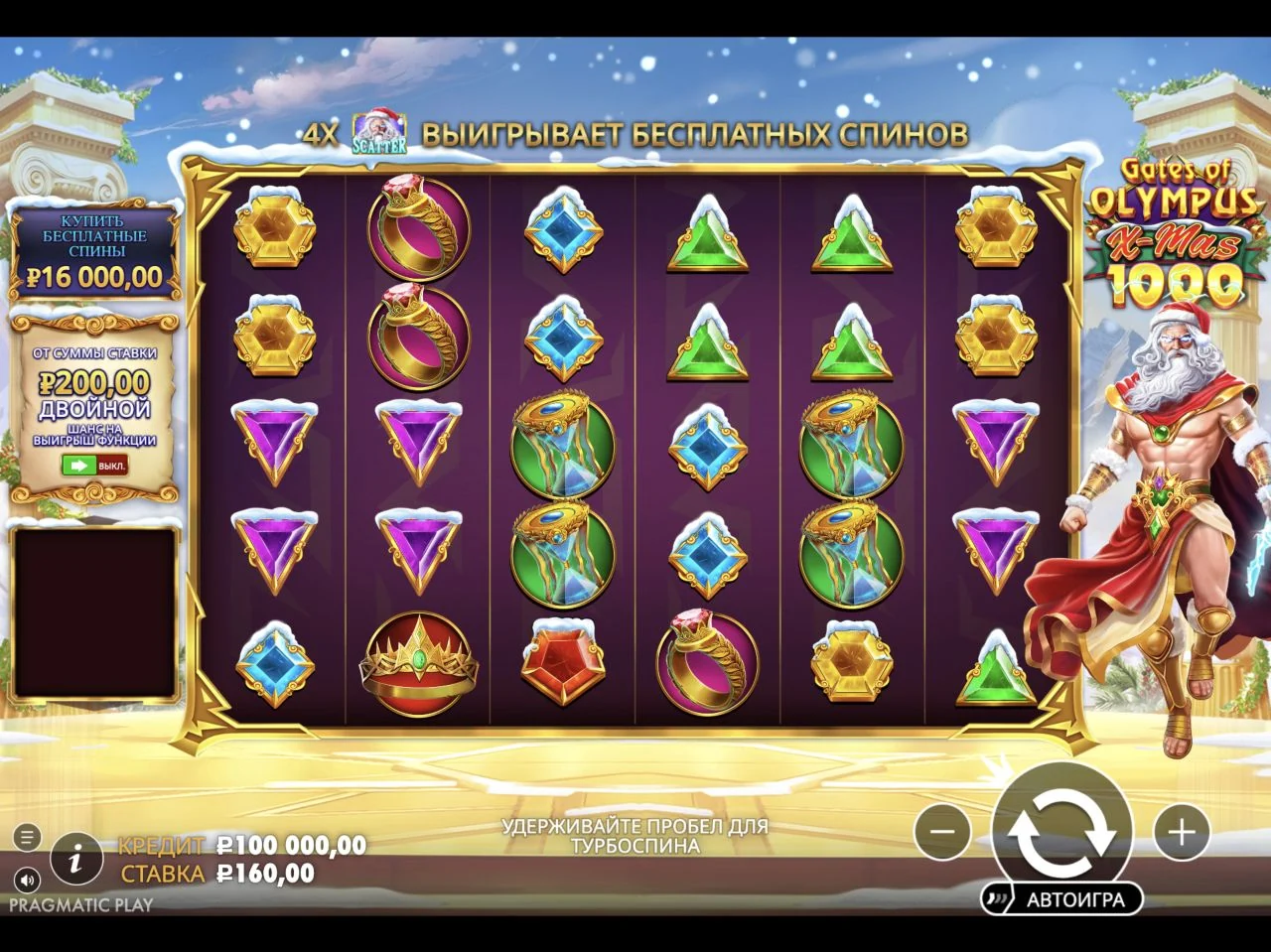











Same core, different ceiling
Gates of Olympus and Gates of Olympus 1000 are two Pragmatic Play slots built on the same mechanical foundation. Both use a 6×5 grid, payouts for eight or more matching symbols anywhere on the board, cascades, and random multipliers. The 1000 version does not reinvent the game: it strengthens the exact part of the formula that the original is built around.
The main difference is clear from the name. In the original, the maximum multiplier symbol reaches 500x, while in the 1000 version it goes up to 1000x. Along with that, the maximum win increased from 5000x to 15,000x the bet. That is an important difference, but it does not mean every round in the 1000 version is automatically more generous. Both games remain highly volatile and can go for long stretches with small clusters and no strong multiplier.
What stayed the same
The basic rhythm of the two slots is almost identical. To win, you do not need a line from left to right, but a group of matching symbols anywhere on the grid. After a win, the symbols involved disappear, new ones fall from above, and a single spin can continue through several cascades.
In both games, Zeus stands next to the grid. He can add one or more winged multipliers in both the base game and the free spins. A multiplier by itself does not create a payout: it needs a winning cascade. If a 100x appears on the board but no paying group lands after the drop, that value does not turn into a separate prize.
The bonus is triggered by four or more Scatters. The starting package is the same in both games: 15 free spins. Three or more Scatters during the bonus add another five spins. So the entry structure is familiar in both the original and the 1000 version: players do not need to learn the rules from scratch.
Multipliers: 500x vs 1000x
In the original Gates of Olympus, random multipliers range from 2x to 500x. In Gates of Olympus 1000, the upper limit is raised to 1000x. If several multipliers appear on a single winning cascade, their values are added together rather than multiplied. For example, 25x and 100x create a total coefficient of 125x for that payout.
This is where the 1000 version gets more room to breathe. One symbol can hit twice as high, and the game’s maximum win is three times larger. But the real pace still depends on two things lining up: a win has to form, and a useful multiplier has to land in that same cascade.
How the free spins differ
In the bonus round, both versions use an accumulating counter. A multiplier that appears on a winning spin is added to the total for the round. The accumulated value carries over to the next free spins, so a later win can end up significantly stronger than an earlier one.
In Gates of Olympus 1000, that principle has not changed, but the range up to 1000x makes rare big hits potentially more impactful. This is not a new bonus mechanic, but an expanded scale of the same system. So the 1000 version suits players who like the original logic but want a higher ceiling. If a familiar balance matters more, the original remains a standalone choice rather than an outdated copy.
How to compare the versions in demo mode
It is more useful to compare not isolated wins, but the behavior of the mechanic across a series of spins. First, see how many cascades usually continue a single spin and how often a multiplier appears together with a payout. Then look at the bonus: how quickly the total counter grows and whether it manages to trigger on later wins.
One large multiplier does not prove that a version is better, and an empty bonus does not mean the game is broken. Demo mode shows structure and pace, but it does not predict the next session. For a clear comparison, it is enough to answer three questions: is the eight-symbol payout system easy to understand, is the high volatility comfortable, and does the wider multiplier range really change the feel of the game?
Short conclusion
Gates of Olympus 1000 keeps the 6×5 grid, any-position payouts, cascades, and 15 starting free spins from the original. Its key changes are multipliers up to 1000x and a maximum win of 15,000x instead of 500x and 5000x. It is an enhanced version of a familiar formula, not a separate mechanical system.